
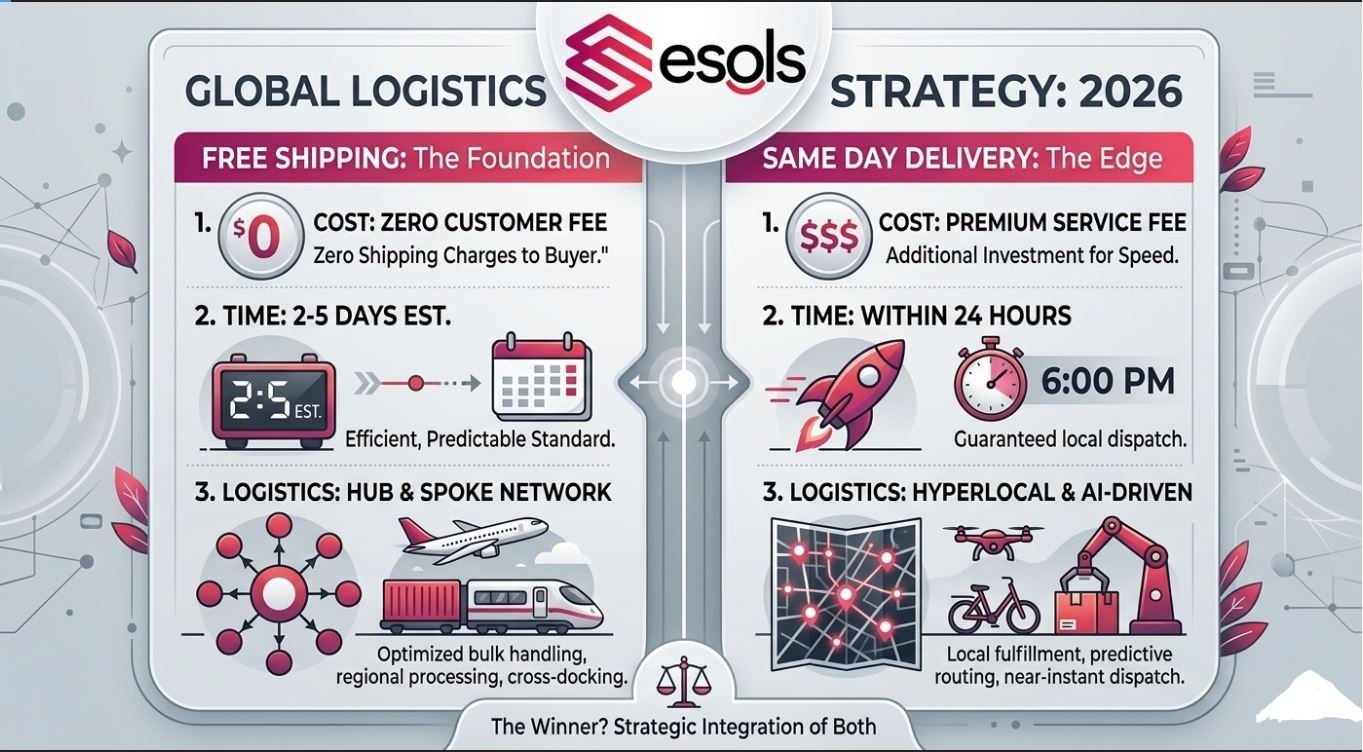
Online shopping trends 2026 have reached a tipping point. Customers no longer just want low prices — they want speed and savings at the same time. But here’s the problem: most e-commerce stores can’t offer both without losing money.
So which one actually wins in 2026 — free shipping vs same day delivery?
The answer isn’t as simple as you think. In this blog, we’ll break down fast delivery vs free delivery, what customers really expect, and how your business should choose — or combine — these options to boost sales.
What is Free Shipping?
Free shipping means the customer pays nothing for delivery, regardless of order size or speed. It’s often offered with minimum purchase thresholds (e.g., “free shipping on orders over $50”).
In 2026, free shipping is no longer a “nice to have.” It’s an e-commerce customer expectation — especially after Amazon Prime and Walmart+ normalized it.
What is Same Day Delivery?
Same day delivery means the customer receives their order within hours — not days. It’s powered by local fulfillment centers, gig economy drivers, or services like Uber Direct and DoorDash Drive.
While incredibly convenient, same day delivery almost always comes with a fee, unless you’re a premium member or meet high spending requirements.
Key Differences Between Free Shipping and Same Day Delivery
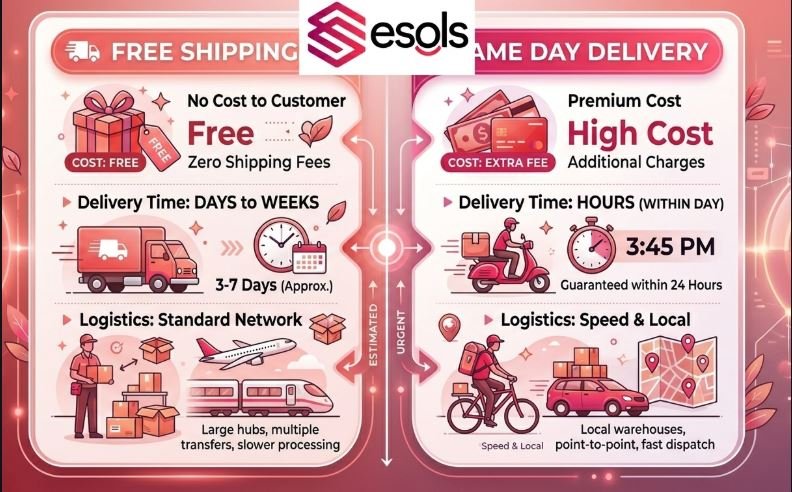
| Factor | Free Shipping | Same Day Delivery |
|---|---|---|
| Cost to customer | $0 (sometimes with minimum spend) | 5–15+ |
| Delivery time | 3–7 days | 2–6 hours |
| Best for | Budget shoppers, non-urgent items | Impulse buyers, gifts, essentials |
| Business cost | Low to moderate | High (logistics + labor) |
| Return rate | Standard | Higher (due to rushed purchases) |
Pros & Cons of Each Delivery Model
Free Shipping – Pros
- Increases conversion rates by up to 30%
- Reduces cart abandonment
- Works well for repeat purchases (e.g., household goods)
- Easy to implement with standard carriers
Free Shipping – Cons
- Slower delivery (3–7+ days)
- Less control over customer experience
- Can hurt margins if not properly managed
Same Day Delivery – Pros
- Creates “wow” customer moments
- Reduces purchase hesitation
- Essential for perishables, gifts, and last-minute needs
- Competitive advantage over slower rivals
Same Day Delivery – Cons
- Expensive to scale
- Requires local inventory or dark stores
- Not profitable for low-margin products
Which One Wins in 2026? (The Honest Answer)
It depends on your customer’s urgency and product type.
- For everyday essentials (toiletries, baby supplies, coffee): Free shipping wins. Customers plan ahead.
- For impulse or last-minute items (flowers, electronics, birthday gifts): Same day delivery wins.
- For fashion, furniture, or luxury goods: Free shipping is expected; same day delivery is rarely needed.
According to recent online shopping trends 2026, 68% of consumers say free shipping makes them more likely to buy, while only 34% are willing to pay extra for same day delivery. However, among customers aged 18–34, same day delivery preference has grown 22% year over year.
Verdict: Free shipping still wins for volume and conversions. Same day delivery wins for loyalty and premium positioning.
Best Strategy for Online Stores in 2026
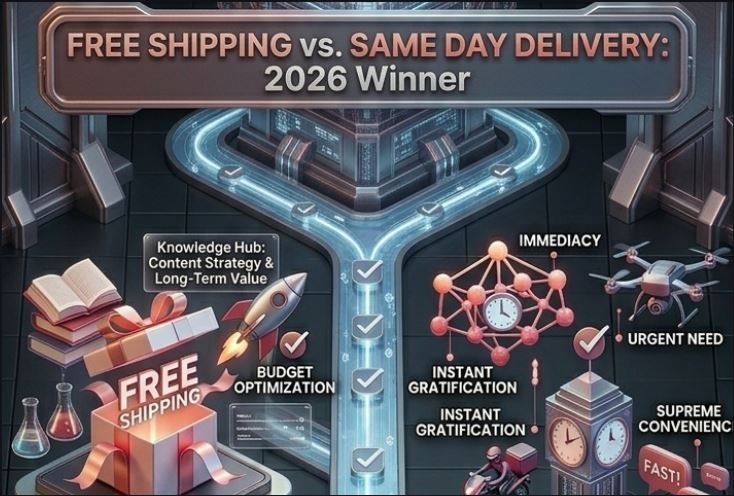
You don’t have to choose just one. In fact, the smartest e-commerce brands use a hybrid strategy:
Hybrid Model (Recommended):
- Offer free shipping on orders over $40 (standard delivery)
- Offer same day delivery as an upgrade for $9.99 or free for loyalty members
- Show both options at checkout so customers decide based on their need
This approach satisfies both fast delivery vs free delivery customer segments without killing your margins.
Example from Shopify stores in 2026:
Many high-volume stores now use:
- Free shipping (5–7 days)
- Express shipping (2–3 days for $4.99)
- Same day delivery (available only in cities for $12.99)
Result: 47% choose free, 33% choose express, 20% choose same day. Total revenue per order increases by 18%.
What Small Businesses vs Big Brands Should Do
| Business Type | Best Strategy |
|---|---|
| Small business | Free shipping over $40 only. Avoid same day unless hyper-local. |
| Big brand | Free shipping on everything + paid same day delivery in major metros. |
| DTC startup | Free shipping as a loyalty perk; same day via third-party couriers like DoorDash. |
Amazon continues to dominate same day delivery in 2026, but Walmart, Target, and even local Shopify stores are catching up using local fulfillment networks.
Want to optimize your checkout for higher conversions? Start by A/B testing free shipping thresholds and offering same day delivery as a premium add-on. Your customers will thank you — with their wallets.
FAQs
It depends on urgency. Most shoppers prefer free shipping for regular purchases, but same-day delivery wins when they need an item quickly, such as groceries or last-minute gifts.
Yes, expectations are rising in 2026. Many customers prefer platforms that offer both, but they are usually willing to pay extra for same-day delivery if needed.
Free shipping reduces cart abandonment and encourages customers to complete purchases, especially for non-urgent items or higher-value orders.
Same-day delivery is worth it for urgent needs, perishable goods, or time-sensitive items like event supplies or essential electronics.
A balanced strategy works best: offer free standard shipping to attract customers and provide same-day delivery as a premium paid option for convenience.
Conclusion
So, free shipping vs same day delivery — which one wins?
For most online stores in 2026, free shipping wins on volume and conversions, while same day delivery wins on customer delight and urgency.
But the real winners are brands that offer both — and let the customer choose based on their need, budget, and timeline.
Align your delivery strategy with e-commerce customer expectations, test what your audience actually buys, and remember:
Speed sells, but free builds loyalty. The best brands give customers both.
