
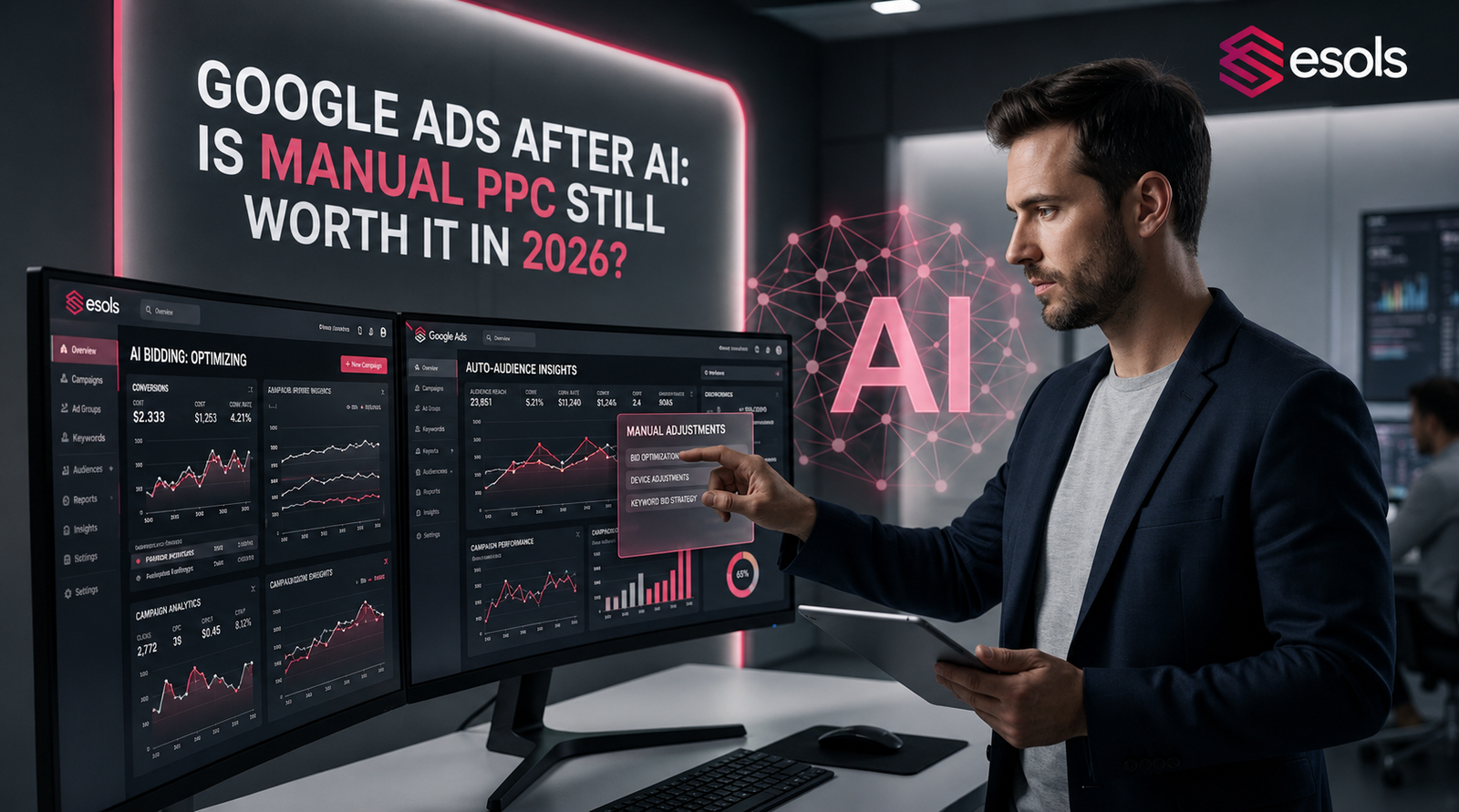
Google Ads has undergone one of its biggest transformations since its launch. Artificial intelligence now powers bidding strategies, audience targeting, keyword matching, creative optimization, and campaign management. Features like Performance Max, Smart Bidding, AI-generated assets, and Demand Gen campaigns have changed how businesses advertise online.
But this shift has raised an important question for marketers and business owners:
Is Manual PPC still worth using in 2026, or should businesses rely entirely on Google’s AI?
The answer isn’t as simple as choosing one over the other. While AI has made campaign management faster and more efficient, manual control remains valuable for businesses that need precision, transparency, and strategic decision-making.
In this guide, we’ll explore how Google Ads After AI has evolved, compare automated and manual PPC strategies, explain where each approach works best, and help you choose the right advertising strategy for your business in 2026.
Table of contents
How Google Ads Has Changed After AI
Artificial intelligence is now at the center of nearly every Google Ads campaign. Instead of manually adjusting bids, selecting exact audiences, and optimizing ads one by one, advertisers can now let Google’s machine learning make thousands of real-time decisions every day.
Some of the biggest AI-powered features include:
- Smart Bidding
- Performance Max campaigns
- Demand Gen campaigns
- Broad Match with AI
- Automatically generated ad assets
- Predictive audience targeting
- AI-powered recommendations
Google’s automation analyzes thousands of signals, including:
- Device
- Location
- Search intent
- Time of day
- User behavior
- Previous conversions
- Browser
- Operating system
- Shopping history
- Demographics
This enables campaigns to optimize faster than any human could manually.
However, automation doesn’t eliminate the need for strategy.
What Is Manual PPC?
Manual PPC refers to campaigns where advertisers maintain greater control over campaign settings instead of relying entirely on automation.
This includes:
- Manual keyword research
- Exact and phrase match keywords
- Manual audience targeting
- Custom bidding strategies
- Negative keyword optimization
- Ad scheduling
- Device adjustments
- Geographic targeting
- Landing page testing
Instead of allowing Google’s AI to make every decision, marketers actively optimize campaigns based on business goals and performance data.
AI Google Ads vs Manual PPC
| Feature | AI Google Ads | Manual PPC |
| Bid Management | Automated | Manual |
| Keyword Matching | Broad AI Matching | Exact Control |
| Audience Selection | AI Prediction | Custom Selection |
| Speed | Very Fast | Slower |
| Learning Ability | Improves Over Time | Depends on Manager |
| Transparency | Lower | Higher |
| Budget Control | Moderate | High |
| Best for Beginners | Yes | No |
| Best for Experts | Yes (with oversight) | Yes |
Neither option is universally better. The right choice depends on your business goals, budget, and campaign type.
Benefits of AI Google Ads
1. Faster Optimization
AI continuously analyzes campaign performance and adjusts bids in real time.
Instead of waiting days to optimize manually, Google’s machine learning responds almost instantly.
2. Better Conversion Predictions
Google uses billions of data points to predict which users are most likely to convert.
This helps improve:
- Conversion rate
- Return on Ad Spend (ROAS)
- Cost per Acquisition (CPA)
3. Saves Time
Business owners no longer need to spend hours adjusting bids every day.
Routine optimization becomes largely automated.
4. Smarter Audience Targeting
AI identifies users based on intent rather than simple demographics.
It considers browsing behavior, search history, and purchase signals to reach potential customers more effectively.
5. Cross-Channel Advertising
Performance Max can display ads across:
- Google Search
- YouTube
- Gmail
- Discover
- Maps
- Shopping
- Display Network
Managing these channels manually would require multiple campaigns.
Limitations of AI Google Ads
Although automation is powerful, it isn’t perfect.
Limited Transparency
Google often hides exactly how decisions are made.
Advertisers may not know:
- Which placements performed best
- Why budgets shifted
- Which audiences received the highest spend
Less Manual Control
Businesses with strict advertising requirements may struggle with AI’s automated decisions.
For example:
- Luxury brands
- Medical services
- Legal firms
- Financial companies
often require tighter keyword and audience control.
Learning Period
AI campaigns need sufficient conversion data before reaching peak performance.
Small businesses with limited traffic may experience inconsistent results during this phase.
Broad Targeting Risks
Without proper exclusions, AI may spend budget on lower-quality traffic.
Regular monitoring remains essential.
Benefits of Manual PPC
Complete Budget Control
Manual campaigns allow advertisers to decide exactly where every advertising dollar is spent.
This reduces unnecessary spending.
Better Keyword Precision
Exact Match keywords help businesses target highly relevant searches.
Example:
Instead of targeting:
“running shoes”
You can target:
“buy men’s trail running shoes”
This increases relevance and conversion potential.
Easier Testing
Manual PPC makes A/B testing more straightforward.
You can independently test:
- Headlines
- Descriptions
- Landing pages
- Calls to action
- Offers
Better Reporting
Manual campaigns provide clearer insights into:
- Keyword performance
- Search terms
- Device performance
- Geographic results
- Audience behavior
This transparency helps marketers make informed decisions.
Limitations of Manual PPC
Manual management also comes with challenges.
Time Intensive
Campaigns require ongoing monitoring, bid adjustments, keyword updates, and performance reviews.
Requires Experience
Successful manual PPC depends on strong analytical skills and platform expertise.
Slower Optimization
Humans cannot process data as quickly as machine learning.
As campaigns grow, manual optimization becomes increasingly difficult.
When Should You Use Performance Max?
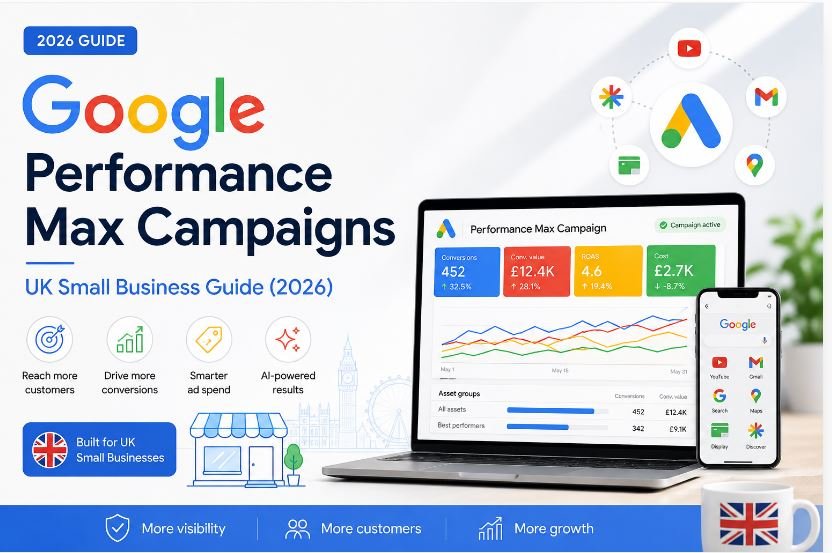
Performance Max is ideal when your goal is to maximize conversions across Google’s entire ecosystem.
It works best for:
- E-commerce stores
- Retail businesses
- Large product catalogs
- Businesses with conversion history
- Companies seeking maximum reach
Example
An online furniture retailer wants to advertise:
- Beds
- Sofas
- Dining tables
- Mattresses
- Wardrobes
Instead of creating separate Search, Display, Shopping, and YouTube campaigns, Performance Max can optimize across all channels using one campaign.
When Search Campaigns Are the Better Choice
Search campaigns remain highly effective for businesses targeting users with clear purchase intent.
Examples include:
- Emergency plumbing services
- Digital marketing agencies
- Legal services
- Roofing companies
- Accountants
- Dentists
When someone searches for “best PPC agency near me” or “emergency plumber in Birmingham,” Search Ads can capture high-intent traffic more precisely than broader automated campaigns.
