
Introduction
Is your website stuck on page two of Google SEO Ranking despite all your efforts? You’re not alone. Countless website owners struggle to move up because they’re following outdated tactics, social media myths, and misleading advice that can actually damage their progress instead of improving it.
The problem is that the SEO world is flooded with conflicting information. What worked in 2015 may actually hurt your rankings today — and some “secret tactics” circulating online are flat-out fiction.
In this guide, we’ll cut through the noise and give you a clear, evidence-based breakdown of what actually influences Google SEO rankings in 2025 — and what doesn’t. Whether you’re a blogger, business owner, or digital marketer, this article will help you focus your energy on strategies that truly move the needle.
Why Google SEO Ranking Is So Misunderstood
Google’s algorithm is one of the most complex systems ever built. It uses over 200 ranking factors, updates hundreds of times per year, and processes billions of searches daily. With that level of complexity, it’s no surprise that myths and misinformation thrive.
Many SEO “experts” make bold claims without citing evidence. Others rely on correlation studies and confuse them with causation. And since Google rarely reveals the inner workings of its algorithm, speculation fills the gap.
The result? A landscape where facts and fiction sit side by side — and it’s hard to tell them apart.
The Core Google SEO Ranking Factors (What’s Actually True)
Content Quality Is King — and Always Has Been
FACT: Google’s primary mission is to deliver the most relevant, helpful content to searchers. High-quality, in-depth content that satisfies user intent consistently outranks thin or keyword-stuffed pages.
What “quality” actually means to Google:
- E-E-A-T (Experience, Expertise, Authoritativeness, Trustworthiness): Google’s quality rater guidelines explicitly mention these four qualities. Pages written by credible, experienced authors on authoritative domains tend to rank higher — especially in sensitive niches like health, finance, and law.
- Search Intent Alignment: If someone searches “how to fix a leaking pipe,” they want a tutorial, not a product page. Google rewards content that matches what users are actually looking for.
- Depth and Comprehensiveness: Longer, well-structured content tends to rank better — not because of word count alone, but because it covers topics thoroughly and answers follow-up questions.
Fiction Busted: “Keyword density of 2–3% is required to rank.” There is no magic keyword percentage. Keyword stuffing is a penalty risk. Natural, contextual keyword use is what matters.
Backlinks Still Matter — But Quality Beats Quantity
FACT: Backlinks remain one of Google’s most important ranking signals. A link from a high-authority, relevant website acts as a vote of confidence for your content.
What actually works:
- Relevance of linking domain: A backlink from a cooking blog to a recipe site carries more weight than one from an unrelated tech forum.
- Domain Authority: Links from established, trusted domains (like .edu, .gov, or major news outlets) have a stronger impact.
- Natural link profiles: A diverse, organically earned link profile is far more valuable than a cluster of links from the same low-quality source.
Fiction Busted: “Buying 1,000 backlinks will boost rankings fast.” Purchased or spammy backlinks can trigger Google’s Penguin algorithm and result in manual penalties, tanking your rankings entirely.
Page Experience and Core Web Vitals Are Real Ranking Signals
FACT: Since Google’s Page Experience update, technical performance metrics known as Core Web Vitals are confirmed ranking factors. These include:
- LCP (Largest Contentful Paint): How fast the main content loads. Target: under 2.5 seconds.
- FID / INP (Interaction to Next Paint): How quickly your page responds to user input. Target: under 200ms.
- CLS (Cumulative Layout Shift): How stable the page layout is during loading. Target: under 0.1.
A slow, glitchy website sends negative signals to Google — and frustrates users, increasing bounce rates that indirectly hurt rankings.
Fiction Busted: “UX and design don’t affect SEO.” Page experience is now a confirmed signal. A beautiful but slow website will lose to a fast, functional one.
On-Page SEO Optimization Is Non-Negotiable
FACT: Technical on-page elements send direct signals to Google about what your page is about and how it should be ranked.
Key on-page ranking factors include:
- Title Tag: Include your primary keyword near the beginning. Keep it under 60 characters. This is one of the strongest on-page signals.
- Meta Description: While not a direct ranking factor, a compelling meta description improves click-through rates (CTR), which indirectly influences rankings.
- URL Slug: Short, clean URLs with your target keyword outperform long, confusing ones. Example: /google-seo-ranking-facts beats /p=12345.
- Header Tags (H1–H3): Use one H1 with your primary keyword, and structure subtopics with H2s and H3s. This helps both Google and users navigate your content.
- Image ALT Text: Google can’t see images — it reads ALT text. Include descriptive, keyword-relevant ALT attributes on every image.
- Internal Linking: Linking to related pages on your site helps Google crawl your site, distributes page authority, and keeps users engaged longer.
Fiction Busted: “Putting your keyword in every paragraph boosts rankings.” Over-optimization is penalized. Use your primary keyword naturally, and let LSI keywords (related terms) do the rest.
User Signals Matter More Than Most SEO Guides Admit
FACT: Google tracks behavioral signals to understand whether users find your content valuable. These include:
- Click-Through Rate (CTR): Pages with higher CTRs may receive a rankings boost. A compelling title and meta description can improve CTR significantly.
- Dwell Time: If users land on your page and stay for several minutes, it signals to Google that your content is satisfying their query.
- Bounce Rate in Context: A high bounce rate isn’t always bad — it depends on search intent. A user who finds the answer to a quick question and leaves immediately is still a satisfied visitor.
Fiction Busted: “Google doesn’t use engagement metrics.” Google has access to Chrome browser data, Search Console data, and its own analytics signals. Behavioral data almost certainly plays a role in rankings.
Mobile-First Indexing Is the Default

FACT: Google now uses the mobile version of your website for indexing and ranking. If your site isn’t mobile-friendly, you’re at a serious disadvantage — regardless of how good your desktop version is.
What this means for you:
- Use responsive design that adapts to all screen sizes.
- Ensure fonts are readable without zooming.
- Make buttons and navigation elements easy to tap on mobile.
- Avoid intrusive pop-ups that block content on mobile devices.
Fiction Busted: “Mobile optimization is optional if most of my traffic is from desktop.” Google indexes the mobile version first. Poor mobile experience harms rankings for all users.
Common Google SEO Myths — Completely Debunked
Myth 1: “You Need to Submit Your Sitemap Every Week”
Fiction. Submitting your sitemap once in Google Search Console is sufficient. Google’s crawlers will revisit your site regularly on their own. Repeated submissions do not speed up indexing or improve rankings.
Myth 2: “Meta Keywords Still Help Rankings”
Fiction. Google officially stopped using the meta keywords tag as a ranking signal back in 2009. Adding them wastes time and does nothing for your rankings.
Myth 3: “Longer Content Always Ranks Better”
Fiction. Word count alone is not a ranking factor. A 3,000-word article that repeats itself won’t outrank a tight, comprehensive 900-word guide that perfectly answers the query. Quality and intent-match matter more than length.
Myth 4: “Social Media Shares Directly Boost Google Rankings”
Fiction. Google has confirmed that social signals (likes, shares, retweets) are not direct ranking factors. However, content that goes viral on social media often earns more backlinks — which do affect rankings indirectly.
Myth 5: “Exact Match Domains (EMDs) Guarantee Top Rankings”
Fiction. Having a domain like best-seo-tips.com won’t automatically push you to position one. Google’s EMD update in 2012 devalued low-quality exact-match domains. Brand authority and content quality matter far more.
Images and Media Optimization for SEO
Visual content plays a bigger role in SEO than many people realize. Here’s how to get it right:
- Use relevant, high-quality images that support your written content. Stock photos are fine, but original images or infographics perform better for engagement.
- Compress all images before uploading. Large image files significantly slow down page load times, hurting your Core Web Vitals score. Tools like Tiny PNG or Squoosh work well.
- Always write descriptive ALT text. Include your target keyword naturally where it makes sense. Example: alt=”Google SEO ranking factors explained”.
- Use descriptive file names instead of IMG_1234.jpg. Rename files to something like google-seo-ranking-guide.jpg.
- Consider adding video content. Pages with embedded videos tend to have higher dwell times, sending positive signals to Google.
External Linking: Why Linking Out Actually Helps You
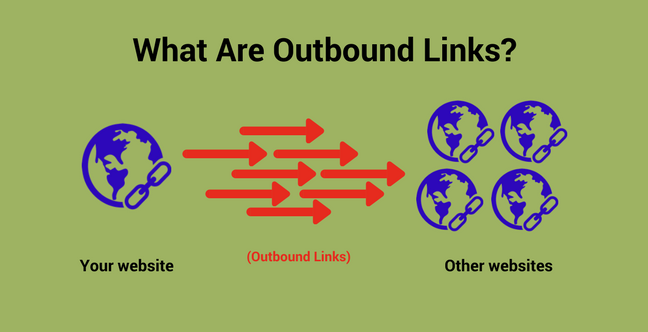
Many site owners are afraid to link to external websites, fearing they’ll “lose” their SEO authority. This is a misconception.
Linking to high-authority, relevant external sources actually signals to Google that your content is well-researched and trustworthy. It improves your E-E-A-T score and provides real value to readers.
Best practices for external linking:
- Link to authoritative sources like Google’s official documentation, Moz, Search Engine Journal, or reputable academic and government sites.
- Use external links to back up statistics, claims, or technical advice.
- Open external links in a new tab to keep users on your site.
- Avoid linking to low-quality, spammy, or irrelevant websites.
FAQs
Most new pages take 3 to 6 months to rank competitively on Google, sometimes longer for high-competition keywords. Factors like domain authority, backlink profile, and content quality all affect the timeline. Established sites with strong authority can rank new pages faster — sometimes within days or weeks.
Focus on one primary keyword and 3–5 related (LSI) keywords per page. Trying to rank for too many keywords dilutes your focus and confuses search intent signals. Use tools like Google Keyword Planner, Ubersuggest, or Ahrefs to find related terms your audience is searching for.
Google’s official position is that it targets low-quality, spammy content — not AI-generated content specifically. Well-written, helpful, and accurate AI-assisted content that demonstrates E-E-A-T can rank just as well as human-written content. The key is quality and usefulness, not the method of creation.
Yes. Google confirmed HTTPS as a ranking signal in 2014. Sites using SSL certificates (HTTPS) receive a slight ranking boost over HTTP sites. More importantly, users trust HTTPS sites more, improving CTR and conversion rates.
Not exactly penalize — but it does filter. Google tries to show the most relevant version of duplicate content and may suppress other copies in search results. Canonical tags (<link rel=”canonical”>) help you tell Google which version of a page is the authoritative one.
Conclusion
Google SEO ranking doesn’t have to be a mystery. When you strip away the myths and focus on what’s proven — high-quality content, strong backlinks, fast page experience, solid on-page optimization, and a mobile-first approach — the path to better rankings becomes clear.
The biggest mistake most website owners make is chasing quick fixes and “hacks” that either don’t work or actively damage their rankings. Real SEO is a long game that rewards consistency, quality, and a genuine focus on helping your audience.
Start by auditing your existing content against the facts outlined in this guide. Fix your page speed, optimize your on-page elements, build authoritative links naturally, and write content that truly answers what your audience is searching for.
Do that consistently — and Google will reward you for it.
