
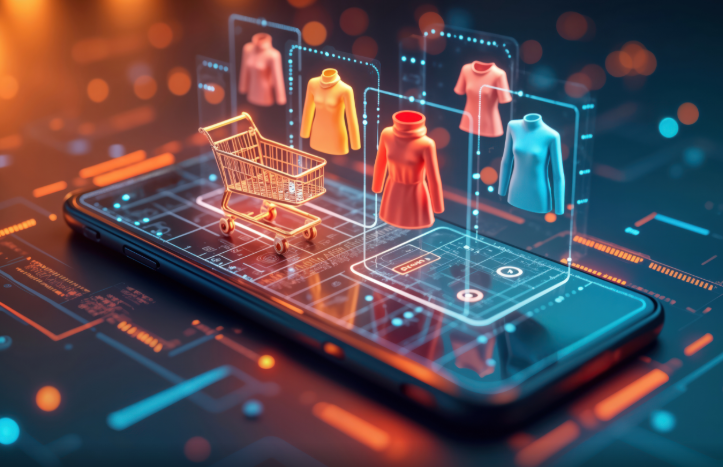
Shopping on Amazon in 2026 looks nothing like it did just five years ago. What was once a simple search-and-checkout experience has evolved into something that feels almost telepathic — powered by advanced artificial intelligence, autonomous logistics, and deeply personalized technology that learns your habits faster than you realize.
If you’ve noticed that Amazon seems to know what you need before you even search for it, you’re not imagining things. The platform has made some of the most aggressive investments in AI and automation of any company on the planet, and the results are showing up in every corner of the shopping experience.
In this article, you’ll get a detailed look at Amazon AI shopping technology in 2026 — what’s changed, what’s new, and what it means for you as a consumer, a seller, or a business owner.
Why Amazon’s Technological Evolution in 2026 Matters
Amazon has always been a technology company that happens to sell products, not the other way around. However, in 2026, that distinction has never been clearer. Moreover, the company’s investment in AI, robotics, and cloud-powered logistics has now reached a scale where it is actively reshaping expectations across the entire global retail industry.
Consequently, what Amazon does today, the rest of eCommerce tends to copy within two to three years. Therefore, understanding what Amazon is doing technically right now gives you a significant advantage — whether you’re a shopper trying to save time and money, a seller optimizing your listings, or a business strategist watching the future of retail unfold in real time.
Amazon AI Shopping Technology in 2026: The Complete Breakdown
The Rise of Amazon’s Predictive Shopping Engine
Although Amazon’s recommendation system has been powerful for years, by 2026 it has crossed into what industry analysts are calling predictive commerce. Instead of simply suggesting products based on browsing history, Amazon’s AI now builds a detailed behavioral model using purchase history, voice interactions with Alexa, browsing patterns, and even seasonal behavioral data to predict what you’ll need before you actively search for it.
As a result, Amazon now sends some Prime members Anticipatory Shipping notifications — alerts that a product is being prepared for dispatch before the customer places an order, based purely on predicted demand.
The system has reportedly achieved an accuracy rate that makes this viable at scale for consumable and household goods.
Amazon Just Walk Out Technology: Now Mainstream
Amazon’s Just Walk Out cashierless checkout technology, which was first piloted in Amazon Go stores, has expanded dramatically by 2026. The system — which uses a combination of computer vision, sensor fusion, and deep learning to track what shoppers pick up — is now licensed to third-party retailers including airports, stadiums, and convenience store chains across North America, Europe, and parts of Asia.
For shoppers, the experience is frictionless. You enter, grab what you need, and leave. The charge appears on your linked payment method automatically. No lines, no registers, no waiting. What once felt like science fiction is now the standard expectation in urban retail environments where speed matters most.
Amazon Drone Delivery at Scale in 2026
Amazon’s Prime Air drone delivery program, after years of regulatory navigation and technical refinement, has reached genuine commercial scale in 2026. In eligible suburban and semi-urban zones across the United States, the United Kingdom, and select markets in Europe and Australia, Prime members can receive packages weighing under five pounds in under 30 minutes via autonomous drone delivery.
The latest generation of Prime Air drones uses onboard AI for real-time obstacle avoidance, weather adaptation, and precision landing in tight residential spaces. The fleet is managed through a centralized AI dispatch system that optimizes routing, battery management, and airspace coordination with zero human intervention per flight.
Alexa 2026: From Voice Assistant to AI Shopping Companion
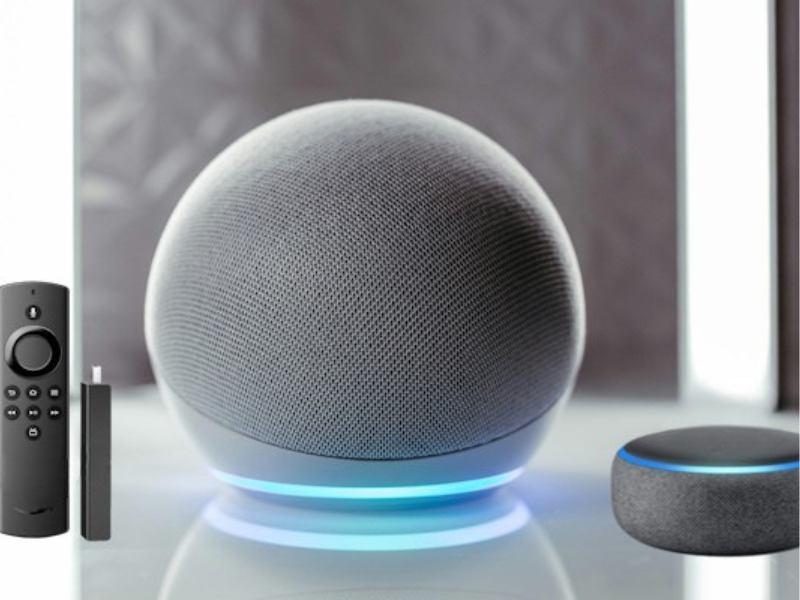
Alexa has undergone a fundamental transformation. In 2026, Alexa is no longer just a voice-activated assistant that adds items to your cart. Powered by a large language model deeply integrated with Amazon’s product catalog, pricing engine, and your personal shopping profile, Alexa now functions as a fully conversational AI shopping companion.
You can ask Alexa things like “What’s the best blender under $80 that won’t break within a year based on reviews?” or “Reorder everything I bought last month that’s running low” — and receive intelligent, contextual answers rather than a list of search results. Alexa can also negotiate Subscribe & Save terms, flag price anomalies, and alert you when a product you’ve considered buying historically hits its lowest price of the year.
Amazon Rufus: The AI Search Revolution
Amazon launched Rufus in late 2024 and upgraded it significantly by 2026.
Rufus is an AI-powered conversational search tool.
It is embedded directly into the Amazon app and website.
Shoppers can ask questions in natural language.
Users can compare products, check compatibility, or request use-case-specific recommendations.
Rufus generates responses using product listings, customer reviews, and Q&A sections.
It also synthesizes information from trusted external sources to deliver accurate answers.
For sellers, Rufus creates a new need for listing optimization.
Products must be described with clear, contextual language.
Listings must answer the questions real shoppers ask.
Competitors who adapt their content strategy outperform listings that are technically accurate but poorly written for conversation.
Amazon’s AI-Powered Seller Tools in 2026
On the merchant side, Amazon has rolled out a suite of AI-driven tools that are changing how sellers operate on the platform. These include automated dynamic pricing engines that adjust product prices in real time based on competitor activity and demand signals, AI listing generators that produce SEO-optimized product titles and bullet points from a simple product description, and inventory forecasting models that help sellers reduce stockouts and overstock situations using predictive demand analytics.
For small and medium-sized sellers, these tools have leveled the playing field significantly. Amazon Seller Central now provides these capabilities, requiring minimal technical knowledge.
Amazon Astro and Home-Based Shopping Automation
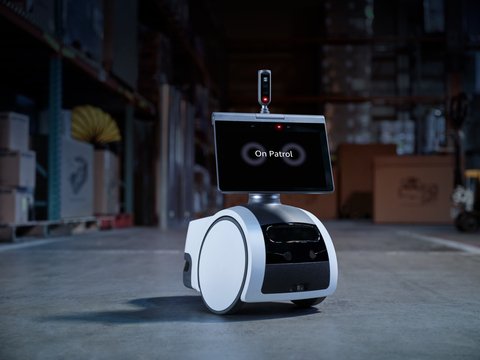
Amazon’s home robot, Astro, has been upgraded with shopping integration features. It can now scan the home environment using built-in cameras and AI recognition technology. The system identifies low or depleted household items automatically. It then places reorder requests on the user’s behalf. While this capability is still rolling out in select markets, it marks an important shift. It clearly reflects Amazon’s long-term vision for automation. A future where the gap between needing a product and ordering it disappears entirely.
Images & Media in Amazon’s 2026 Visual Search Experience
Amazon’s visual search feature has matured significantly.
Shoppers can now use the camera in the Amazon app to photograph any physical product.
This includes items like a friend’s sneakers or furniture in a hotel lobby.
The app instantly finds the same or similar products available on Amazon.
The AI powering this feature is trained on billions of product images.
Its matching accuracy now rivals dedicated visual search engines.
For content creators and bloggers, image optimization remains essential.
Using descriptive ALT text such as “Amazon AI shopping technology 2026 visual search” improves both accessibility and discoverability.
External Resources for Deeper Reading
Those who wish to explore these developments further can read technical deep-dives on the AWS Blog and in the Amazon Science publication. These sources provide detailed explanations of the AI and machine-learning systems behind the features. In addition, Gartner and Forrester have released comprehensive industry reports. They analyze Amazon’s impact on global retail technology standards in 2025 and 2026. Reviewing this research gives readers a broader market perspective.
Select 23 more words to run Humanizer.
FAQs
Most of Amazon’s AI-powered features — including Rufus, predictive recommendations, and Alexa’s upgraded shopping capabilities — are available to all Amazon users globally. Some features like Prime Air drone delivery and Amazon Astro integration remain limited to specific geographic markets and eligible Prime members while rollout continues.
Amazon’s AI systems analyze a wide range of signals including your search history, purchase behavior, wishlist activity, Alexa interactions, and even time-of-day shopping patterns to build a personalized model of your preferences and needs. This model drives everything from homepage product suggestions to the order in which search results are displayed for your account.
Yes. Amazon has refined the system over several years.
It now operates with a very high degree of accuracy across hundreds of retail locations.
Amazon’s customer service team handles occasional discrepancies.
Shoppers can review their itemized receipt.
They can also dispute charges if needed.
Rufus pulls answers from product listings to respond to shopper questions conversationally. This means sellers need to ensure their listings directly address common buyer questions, use clear and complete language, and anticipate the specific use-case questions shoppers might ask rather than simply stuffing keywords into titles and bullet points.
Prime Air drone delivery represents a fundamental shift in last-mile logistics. As the program expands to more regions and regulatory frameworks mature, it is likely to reset consumer expectations around delivery speed the same way Prime two-day shipping did in the mid-2000s. For competitors, matching this capability without Amazon’s infrastructure investment will be a significant challenge.
Conclusion
By 2026, Amazon is operating at a level of technological sophistication that would have seemed extraordinary just a few years ago. AI systems can now predict purchases before they are made. Drones are used to deliver packages in under thirty minutes. Cashierless stores powered by computer vision have been rolled out. These innovations have fundamentally redefined how shopping looks and feels.
The new capabilities can be explored by consumers.
Competition must be maintained by sellers in the AI market.
Insights can be gained by observers of retail technology.
Amazon’s progress is not being slowed down.
The pace of change will be accelerated further.
The future of shopping is already here. The only question is whether you’re ready to take full advantage of it.
