
In today’s competitive digital landscape, businesses can no longer rely on traditional marketing methods alone. Digital transformation is crucial for staying relevant, reaching customers online, and driving sustainable growth. For businesses looking to expand their digital footprint, leveraging modern marketing technologies and strategies is the key to success.
At ESOLs Technologies, we help businesses integrate digital marketing solutions that enhance visibility, engage audiences, and increase revenue.
This article explores digital transformation strategies for businesses from a digital marketing perspective.
What is Digital Transformation in Marketing?
Digital transformation in marketing refers to adopting digital tools, strategies, and platforms to improve how a business reaches, engages, and converts customers online. It’s more than technology—it’s a shift in mindset, where businesses prioritize data-driven decisions, online customer experiences, and measurable results.
Key goals of digital transformation in marketing include:
- Increasing online visibility
- Generating high-quality leads
- Automating repetitive marketing tasks
- Personalizing customer interactions
- Using analytics to optimize campaigns
Top Digital Transformation Strategies for Businesses
1. Develop a Strong Online Presence
A business cannot thrive online without a professional digital footprint. Digital transformation starts with creating and optimizing:
- A responsive, user-friendly website
- Active social media profiles
- Verified Google Business Profile
- Online directories and review platforms
This ensures potential customers can find and trust your brand in the digital space.
2. Leverage Social Media Marketing
Social media platforms are essential tools for engaging audiences and building brand awareness.
Businesses can transform their marketing approach by:
- Creating consistent, high-quality content for platforms like Facebook, Instagram, LinkedIn, and TikTok
- Running targeted social media ads
- Using AI-powered analytics to track engagement and ROI
- Engaging with followers through comments, polls, and interactive content
Social media marketing helps businesses connect directly with their audience and stay competitive.
3. Implement Email Marketing Automation
Email marketing remains one of the most effective digital marketing channels.
Automation allows businesses to:
- Send personalized messages based on user behavior
- Segment audiences for targeted campaigns
- Track open rates, clicks, and conversions
- Nurture leads automatically with drip campaigns
With automation, businesses save time while boosting engagement and sales.
4. Use AI-Powered Marketing Tools
AI technology is a game-changer in digital marketing. Businesses can use AI for:
- Content generation and optimization
- Predicting trending topics and keywords
- Chatbots for instant customer support
- Automated ad targeting and performance analysis
AI enables businesses to make smarter marketing decisions faster, improving results while reducing manual work.
5. Focus on Search Engine Marketing (SEM & SEO)
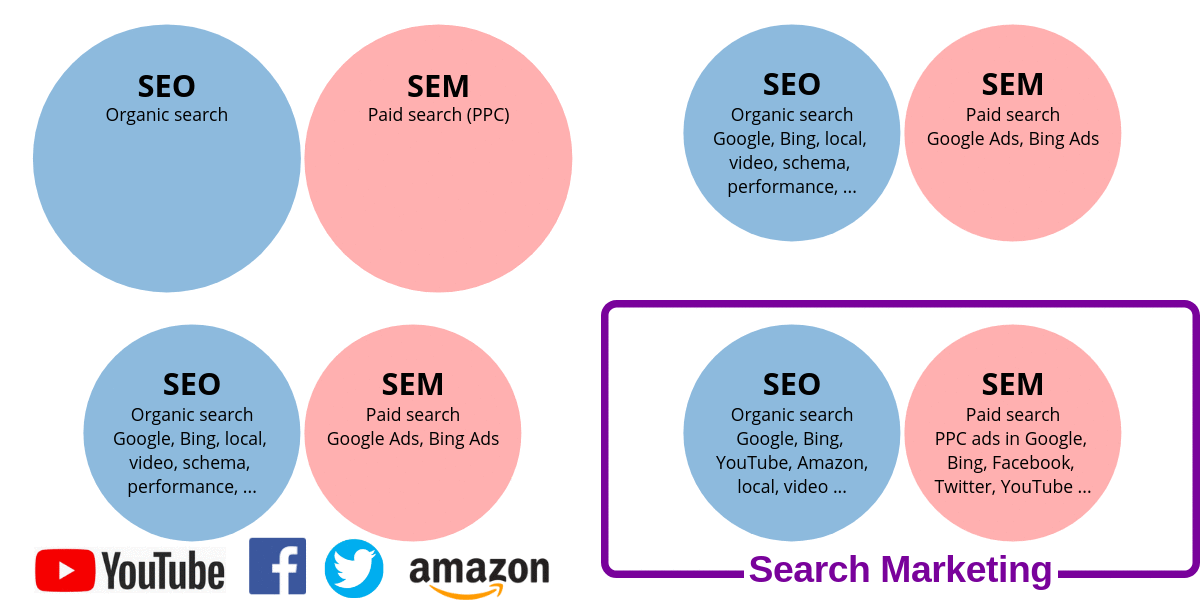
Search engines remain a primary source of customer acquisition. Digital transformation includes optimizing for:
- Organic search (SEO): Keyword research, content optimization, backlinks, and website speed
- Paid search (PPC): Targeted Google Ads campaigns with measurable ROI
By combining SEO and SEM, businesses can capture both immediate and long-term leads.
6. Embrace Data-Driven Marketing
Digital transformation is incomplete without analytics and insights. Businesses should track:
- Website traffic and user behavior
- Social media engagement metrics
- Campaign performance and ROI
- Customer demographics and preferences
Data-driven marketing allows companies to adjust strategies in real time, improving efficiency and maximizing results.
7. Personalize Customer Experiences
Modern customers expect personalized marketing messages. Digital transformation allows businesses to:
- Recommend products based on browsing history
- Send targeted offers via email or social media
- Use AI chatbots to provide personalized support
Personalization boosts engagement, conversions, and customer loyalty.
Benefits of Digital Transformation in Marketing
- Higher ROI: Optimized campaigns and targeted ads reduce wasted spend
- Improved Customer Engagement: Personalization and interactive content increase interaction
- Better Decision-Making: Analytics provide actionable insights
- Brand Authority: Consistent online presence builds trust and recognition
- Scalability: Digital tools make it easier to expand marketing efforts without huge additional costs
Frequently Asked Questions (FAQs)
1. What is digital transformation in marketing?
Digital transformation in marketing is adopting modern tools, strategies, and platforms to improve online visibility, engage customers, and drive measurable business growth.
2. How can businesses start digital transformation?
Start by building a strong online presence, implementing social media and email marketing, using AI tools, and tracking performance through analytics.
3. Is AI necessary for digital marketing?
While not mandatory, AI improves efficiency, predicts trends, personalizes experiences, and provides actionable insights, making it a powerful tool for modern businesses.
4. How does digital transformation increase ROI?
By targeting the right audience, automating repetitive tasks, and using data-driven insights, businesses reduce costs and improve the effectiveness of marketing campaigns.
5. How long does it take to see results from digital transformation?
Results vary by business and strategy, but consistent implementation typically shows measurable improvements in 3–6 months.
Conclusion
Digital transformation is essential for businesses that want to thrive in a digital-first world. By adopting modern marketing strategies, AI tools, and data-driven decision-making, companies can boost online visibility, improve customer experiences, and drive sustainable growth.
