
By Hamid Rabnawaz, E-commerce and Amazon Growth Specialist, CEO of ESOLS Technologies
Every year, UK home brands ask me the same question in October: “Hamid, what should we do for Black Friday?” The honest answer is that winning Amazon Black Friday deals UK shoppers actually buy is not about one big discount on one big day. It is about planning backwards from the event, protecting your margin, and spending your ad budget where it makes money.
In this article I will walk you through my Amazon Black Friday strategy for home and furniture brands, step by step. I will explain what I check, why I check it, and how I make decisions. I use simple numbers so you can see the logic and copy the method for your own account.
Important note on the numbers. Every figure in the tables and examples below is an illustrative sample for a hypothetical UK home brand. These are not real client results and not guaranteed outcomes. They exist to show how the maths works. Your own costs, categories and results will be different, so always run the calculations with your own data.
Table of contents
- Quick Summary: My 11-Step Black Friday Plan
- Step 1: Understand the UK Home and Furniture Market Before Black Friday
- Step 2: Research Competitors, Pricing and Customer Demand
- Step 3: Select the Right Products for Promotional Campaigns
- Step 4: Analyse Profit Margins Before Setting Discounts
- Step 5: Plan Amazon Lightning Deals, Best Deals and Coupons
- Step 6: Prepare Product Listings, Images, A+ Content and Keywords
- Step 7: Plan Amazon PPC Campaigns and Advertising Budgets
- Step 8: Build Anticipation Before Black Friday
- Step 9: Monitor Campaign Performance During the Event
- Step 10: Analyse Sales, ACOS, ROAS and Profitability After the Event
- Step 11: Retarget Customers and Plan Post-Black Friday Sales
- A Simple Black Friday Timeline I Work To
- Common Black Friday Mistakes UK Home Brands Make
- FAQs
Quick Summary: My 11-Step Black Friday Plan
- Understand the UK home market before the event
- Research competitors, pricing and demand
- Pick the right products to promote
- Check profit margins before setting any discount
- Plan Lightning Deals, Best Deals and coupons (where eligible)
- Prepare listings, images, A+ Content and keywords
- Plan Amazon PPC and set budgets
- Build anticipation before the event
- Monitor performance during the event
- Analyse sales, ACOS, ROAS and profit afterwards
- Retarget buyers and plan post-Black Friday sales
Step 1: Understand the UK Home and Furniture Market Before Black Friday
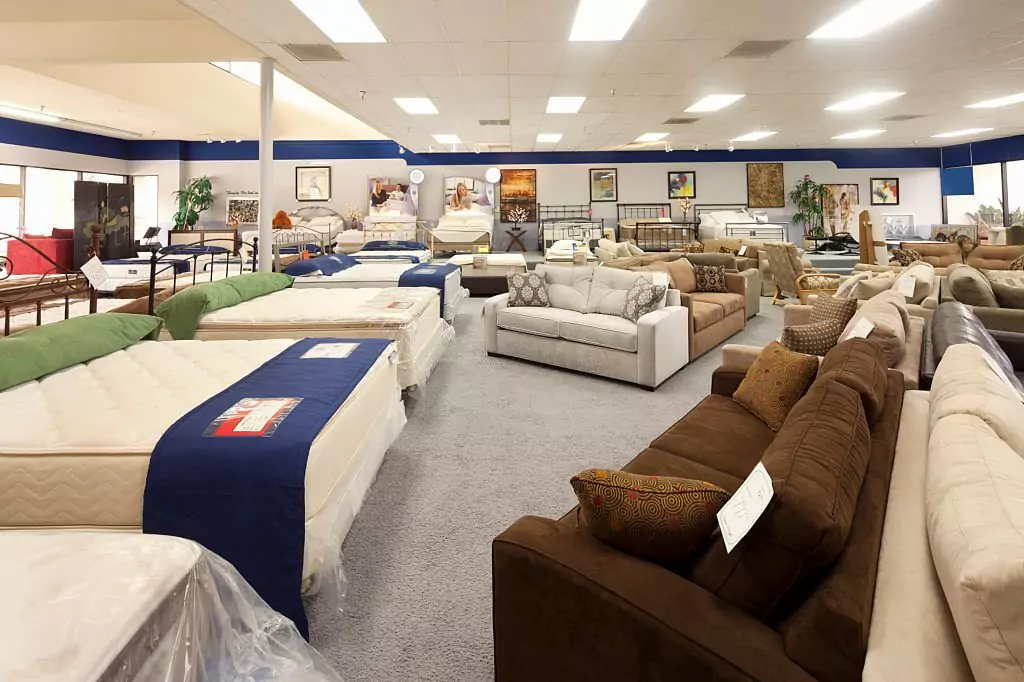
Black Friday for home brands is different from Black Friday for phone chargers or small gadgets. Home and furniture products are bigger purchases. The buyer compares more, waits longer, and cares about delivery time, size and returns.
Here is what I look at first:
- Shopper behaviour. Home buyers often start researching weeks before the event. They save items, compare prices and wait for the deal. So I treat Black Friday as a period, not a single day.
- Delivery and Christmas. Many buyers want sofas, beds, storage units and dining items before Christmas. Stock and delivery promises matter as much as the price.
- Your own history. I pull at least 12 months of sales data from Seller Central Business Reports. I want to see which months were strong, which products grew, and how the last Black Friday went.
- Search demand. If the brand is registered, I use Brand Analytics (search terms and market data) to see which keywords are rising. Outside Amazon, I check Google Trends for UK searches like “storage ottoman”, “bedroom furniture” and “home office desk”.
One pattern I always check in the data: do sales dip in the days before Black Friday because shoppers are waiting for deals? This differs by product and category, so I check it, I do not assume it.
Illustrative example: sales momentum before the event
| Month | Revenue (sample) | Growth vs previous month |
|---|---|---|
| August | £54,000 | n/a |
| September | £62,000 | +14.8% |
| October | £78,000 | +25.8% |
In this my client account, revenue grew 44.4% from August to October. That tells me demand is building and that Black Friday is likely to land on top of an already rising trend. A brand with falling sales going into November needs a different plan, one that fixes listings and stock first.
Set a realistic Black Friday target
I set the target using last year’s event and the current trend, not a random big number.
- Last year’s Black Friday to Cyber Monday window (8 days): £96,000
- This year’s target: £125,000
- Target growth: +30.2% year on year
- Estimated orders at an average order value of about £62: around 2,000 orders
This target must also be supported by stock. If you cannot hold enough inventory for 2,000 orders plus a buffer, the target is wrong, not the stock plan.
Step 2: Research Competitors, Pricing and Customer Demand
Next I look at who we are really fighting against on the page. For home brands, the competition is usually a mix of big names, other private-label sellers and Amazon’s own range.
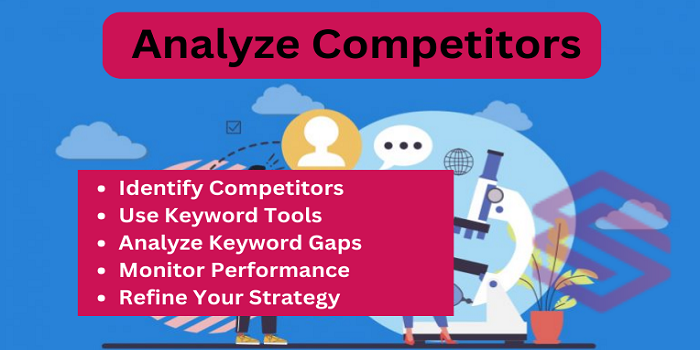
My competitor checklist:
- Price history. I check the normal price and past deal prices of the top 5 to 10 competing products. Tools like Keepa or similar price trackers help here.
- Review quality. I compare star rating, number of reviews and the most common complaints. If a competitor has weak reviews on assembly or size, that is a chance for us to speak to those worries in our images and A+ Content.
- Deal badges. Who had a Lightning Deal or coupon last year, and how did their rank move?
- Keyword overlap. I list the 20 to 30 search terms that matter most and see who owns the top sponsored spots.
- Delivery promise. Prime delivery speed is a big deal for furniture. If a competitor ships faster, a small discount may not be enough.
Then I ask a simple question: Where can we win? Sometimes it is price. More often it is better images, clearer sizing, stronger reviews or faster delivery.
Step 3: Select the Right Products for Promotional Campaigns
I do not discount the whole catalogue. A brand with 18 products might promote only 5 to 7 of them in a deal. This protects margin and makes the ad budget work harder.
I split products into three groups:
- Hero products. Strong sellers with good reviews and healthy stock. These get the main deals and the biggest ad budget.
- Traffic builders. Lower-priced items (cushions, baskets, small storage) that bring new customers in at a smaller discount and can lead to a bigger basket later.
- Do not discount. Items with thin margins, weak reviews, low stock or known return problems. Discounting a product with a 4% return-driven loss makes it worse.
My selection checks for each product:
- Is the star rating good enough? (Amazon deals usually have minimum rating rules, so check the current ones.)
- Do we have enough stock for at least 2 to 3 times normal daily sales?
- Is the margin strong enough to survive a discount?
- Is the listing ready (images, A+ Content, bullet points)?
If the answer to any of these is no, the product waits for another day.
Step 4: Analyse Profit Margins Before Setting Discounts
This is the step many sellers skip, and it is where Black Friday profits are won or lost. Revenue looks great on the dashboard. Profit is what pays the bills.
Here is a simple example for one hypothetical storage ottoman with a normal price of £79.99 (VAT included, as UK Amazon prices are).
Illustrative unit economics at different discount levels
| Normal price | 20% off | 25% off | 30% off | |
|---|---|---|---|---|
| Selling price (inc. VAT) | £79.99 | £63.99 | £59.99 | £55.99 |
| VAT (20%) | £13.33 | £10.67 | £10.00 | £9.33 |
| Price excluding VAT | £66.66 | £53.32 | £49.99 | £46.66 |
| Amazon referral fee (15%) | £12.00 | £9.60 | £9.00 | £8.40 |
| FBA fulfilment fee | £5.10 | £5.10 | £5.10 | £5.10 |
| Landed product cost | £24.00 | £24.00 | £24.00 | £24.00 |
| Ad cost per unit | £6.40 | £6.40 | £6.40 | £6.40 |
| Profit per unit | £19.16 | £8.22 | £5.49 | £2.76 |
| Margin (on price excl. VAT) | 28.7% | 15.4% | 11.0% | 5.9% |
| Extra sales volume needed to match normal profit | 1.0x | 2.3x | 3.5x | 6.9x |
Sample fees and costs. Check the current referral and FBA fee rates for your category and product size in Seller Central.
Look at the last row. At 20% off, you need about 2.3 times more units just to make the same total profit as before. At 30% off, you need almost 7 times more. For most home products, a 30% discount is not a promotion, it is a loss of profit with extra stress.
Know your break-even ACOS
Break-even ACOS is the highest ACOS you can run before losing money. I calculate it like this:
Profit per unit before ad cost ÷ selling price (inc. VAT)
- Normal price: £25.56 ÷ £79.99 = about 32%
- At 20% off: £14.62 ÷ £63.99 = about 23%
So a discount does not just cut your profit. It also lowers the ACOS you can afford. If your ad campaigns run at 28% ACOS on the discounted product, you are losing money on every ad sale. I set ACOS targets for deal products after this calculation, never before.
My rule of thumb: for most home products I look for discounts in the range that keeps a positive margin after ads, and I keep deeper discounts for items with strong margins or for clearing old stock.
Step 5: Plan Amazon Lightning Deals, Best Deals and Coupons
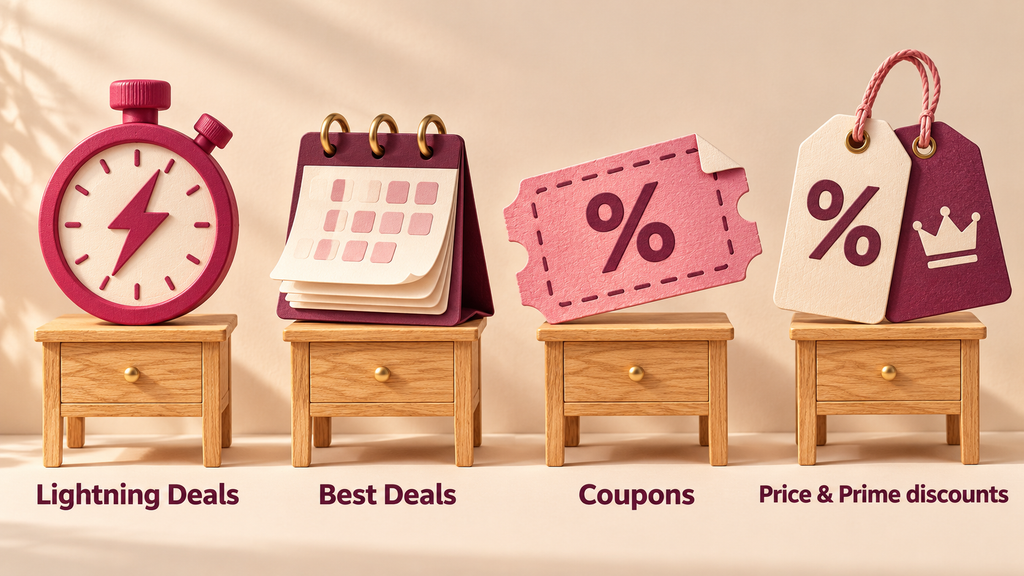
This is where Amazon UK promotions come in. The main tools are:
- Lightning Deals. Short, time-limited deals shown on Amazon’s deals page. Great for visibility, but they usually have fees, stock and price conditions.
- Best Deals (previously 7-day deals). Longer deals that run for several days.
- Coupons. A visible clip-on discount on the search results and product page. Often used on top of a normal price to improve click-through rate.
- Percentage-off and Prime Exclusive Discounts. Price promotions you can set up for eligible products.
The rules change over time: eligibility, fees, minimum discounts, submission deadlines and star-rating requirements. Always read the current rules in Seller Central before you plan. Deal submission windows often close weeks before the event, so planning in late October is usually too late.
How I choose which promotion to use
| Goal | Promotion I usually consider |
|---|---|
| Maximum visibility for a hero product | Lightning Deal or Best Deal (if approved) |
| Better click-through on search results | Coupon (for example 10% off) |
| Reward Prime shoppers | Prime Exclusive Discount |
| Clear old stock | Deeper discount with limited quantity |
| Test price sensitivity before the event | Small coupon in the weeks before |
I never stack a big deal, a coupon and a high-ACOS ad campaign on a product without checking the margin. Stacking looks exciting, but the maths often does not work.
Stock planning for the deal
I plan stock like this: expected deal-day units × 1.5 as a buffer. If a hero product sells 40 units a day normally and I expect 4 times that during the event, I want enough stock for about 240 units a day across the peak days. Running out in the middle of a deal hurts rankings, and getting back to the previous rank takes time.
Step 6: Prepare Product Listings, Images, A+ Content and Keywords
Traffic is expensive during Black Friday. If your listing does not convert, you are paying more to lose more. So I fix the listing before I increase ad spend.
My listing checklist:
- Main image. Clean, bright and clear. For furniture, show the actual product at a realistic size.
- Lifestyle images. Show the item in a real UK room. Buyers need to imagine it in their home.
- Size and dimension image. This reduces wrong-size orders and returns, which are very costly in furniture.
- Assembly and material image. Answer the common worries before the buyer asks.
- Bullet points. Lead with the benefit (storage, comfort, easy assembly), then the detail.
- A+ Content. Comparison charts between your own products help shoppers pick the right size or colour, and can lift basket value.
- Keywords. I update backend and front-end keywords using real search terms, plus long-tail ones like “velvet storage ottoman bench for bedroom”.
- Reviews and Q&A. I answer questions on the listing and watch for repeated complaints that I can fix in the content.
Illustrative before-and-after example
| Metric | Before listing refresh | After listing refresh |
|---|---|---|
| Conversion rate | 7.0% | 9.1% |
| Click-through rate (ads) | 0.38% | 0.46% |
| Return rate (wrong size / not as expected) | 6.5% | 4.8% |
In this sample, the better listing gives a 30% improvement in conversion rate without spending anything extra on ads. I always do this work in October, not in the week of the event.
Step 7: Plan Amazon PPC Campaigns and Advertising Budgets
Now to the part many sellers worry about most: Amazon PPC Black Friday planning. Cost per click goes up during the event because more brands compete for the same shoppers. But conversion rates also go up, because buyers are ready to buy. The aim is to make sure the second effect is bigger than the first.
Sample PPC targets
| Metric | Normal month (sample) | Black Friday period (plan) |
|---|---|---|
| Average CPC | £1.14 | £1.45 (+27%) |
| Conversion rate | 7.0% | 10.5% (+50%) |
| Average selling price | £74 | £62 (after discounts) |
| ACOS | 22.0% | about 22.4% |
| ROAS | 4.5 | about 4.5 |
How the maths works: ACOS = CPC ÷ (conversion rate × average selling price). In the plan: £1.45 ÷ (0.105 × £62) = about 22%. This is why conversion rate matters so much. If conversion falls to 7% while CPC stays at £1.45, ACOS jumps to about 33%.
Sample ad budget
| Phase | Dates | Budget (sample) |
|---|---|---|
| Warm-up | 2 weeks before | £2,000 |
| Event period | Black Friday week to Cyber Monday | £13,000 |
| Post-event retargeting | 7 days after | £1,500 |
| Total | £16,500 |
For the £13,000 event budget, the sample plan is roughly:
- About 9,000 clicks (£13,000 ÷ £1.45)
- About 940 ad orders (9,000 × 10.5%)
- About £58,000 in ad sales (940 × £62)
- ACOS around 22.4% and ROAS around 4.5
- Ad sales are about 46% of the £125,000 revenue target; the rest comes from organic and deal traffic
How I structure the campaigns
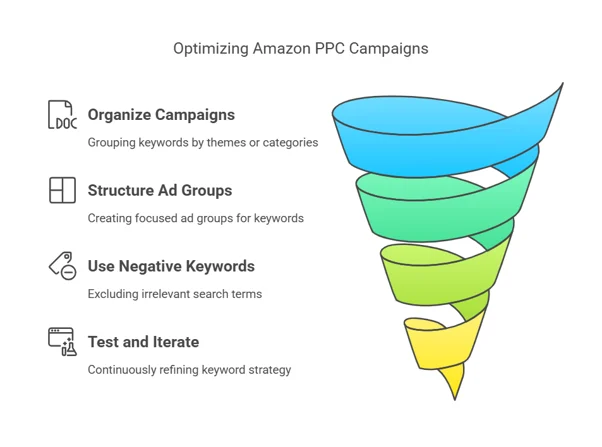
- Sponsored Products: Exact match. Best-performing, high-intent terms. Highest bids and budget.
- Sponsored Products: Auto and Phrase. Discovery. I watch for new converting search terms to move across to exact.
- Sponsored Products: Product targeting. Targeting competitor and complementary ASINs, especially where we win on price or reviews.
- Sponsored Brands. Brand-level visibility with a lifestyle image or video, great for home brands because buyers shop by style.
- Sponsored Display. Reach shoppers who viewed our products and did not buy.
I also add negative keywords (for example “cheap”, “second hand”, “DIY” where they do not fit the product), and I set daily budgets high enough that campaigns do not stop at 2pm on the busiest day. A campaign that runs out of budget early loses the best traffic.
I use placement bid adjustments for the top of search where the data shows it converts at an acceptable ACOS.
If you want help with this, my team at ESOLS offers Amazon PPC management and full Amazon account management for UK brands.
Step 8: Build Anticipation Before Black Friday
Black Friday sales start before Black Friday. I use the 2 to 3 weeks before the event to prepare the audience.
- Raise brand awareness early. Use a modest Sponsored Brands budget to introduce the products shoppers will see on deal day.
- Use coupons or small price tests. A small early coupon on a few products can show how price-sensitive the audience is.
- Email and social. If the brand has a customer email list or social following, send a “deals are coming” message. Amazon Attribution links help me measure how much external traffic turns into Amazon sales.
- Use Amazon Posts and Brand Store updates (if available to your account) to show seasonal collections.
- Build a wishlist habit. Shoppers who save items are more likely to come back when the price drops.
- Check inventory. Stock inbound to FBA must arrive in time. Late stock is a plan problem, not a luck problem.
A good warm-up means the event starts with traffic and momentum, instead of starting from zero.
Step 9: Monitor Campaign Performance During the Event
During the event I check performance several times a day, not once. The market changes quickly, and a good plan on Thursday can need changes on Friday afternoon.
My monitoring checklist:
- Sales vs target. Are we on track for the day’s revenue target?
- Spend vs budget. Are campaigns running out of budget too early?
- ACOS and conversion by campaign. If ACOS is far above the break-even number for a product, I lower the bid or pause the weaker keywords.
- Buy Box. Are we still winning it? A lost Buy Box can destroy a deal.
- Stock levels. Are we selling faster than planned?
- Competitor prices. If a rival drops far below us, I decide whether to react or hold the price.
- Reviews and customer messages. I watch for delivery or sizing issues that can be handled quickly.
Example of an in-event adjustment (sample). On Black Friday morning, a hero product’s campaign is spending fast with a 31% ACOS against a 23% break-even. I lower the bids on the broad terms, move budget to the exact terms converting at 19% ACOS, and the ACOS falls to 24% by the evening. A small change like this, made on time, protects the day’s profit.
My rule is simple: do not chase sales at any price. A sale that loses money is not a win.
Step 10: Analyse Sales, ACOS, ROAS and Profitability After the Event
When the event ends, I wait for the data to settle (including returns and ad attribution) and then compare plan vs result.
Illustrative results: plan vs result (hypothetical brand)
| Metric | Plan | Result (sample) | Difference |
|---|---|---|---|
| Total revenue (8 days) | £125,000 | £131,400 | +5.1% |
| Year-on-year growth | +30.2% | +36.9% | +6.7 pts |
| Orders | about 2,000 | 2,090 | +4.5% |
| Ad spend (event period) | £13,000 | £14,200 | +9.2% |
| Ad sales | £58,000 | £61,300 | +5.7% |
| ACOS | 22.4% | 23.2% | +0.8 pts |
| ROAS | 4.5 | 4.3 | slightly lower |
| TACoS (ad spend ÷ total revenue) | n/a | 10.8% | n/a |
How I read this:
- Revenue beat the target (£131,400 vs £125,000), and year-on-year growth reached 36.9% against the £96,000 last year.
- Daily revenue averaged about £16,400, about 6.5 times the October daily average of roughly £2,500 (£78,000 ÷ 31).
- Ads cost more than planned, and ACOS was a bit higher than hoped. Not a disaster, but I would note it: bids on two broad keywords were too high.
- TACoS of 10.8% shows that ads were not the only driver of sales. Deals, organic rank and brand strength all helped.
But revenue is not the full story. I then check:
- Profit after all costs. Fees, ad spend, discounts, returns, storage and shipping.
- Profit by product. Which products made money and which only made noise?
- Search terms. Which converted well, and which ate the budget?
- Return rate. I wait for returns to come in over the following weeks, since furniture returns can change the final picture.
- New customers. How many were first-time buyers of the brand?
- Rank changes. Did hero products gain organic position that lasts?
The key lesson from every event is simple: write the findings down. Next year’s plan should begin with this year’s notes.
Step 11: Retarget Customers and Plan Post-Black Friday Sales
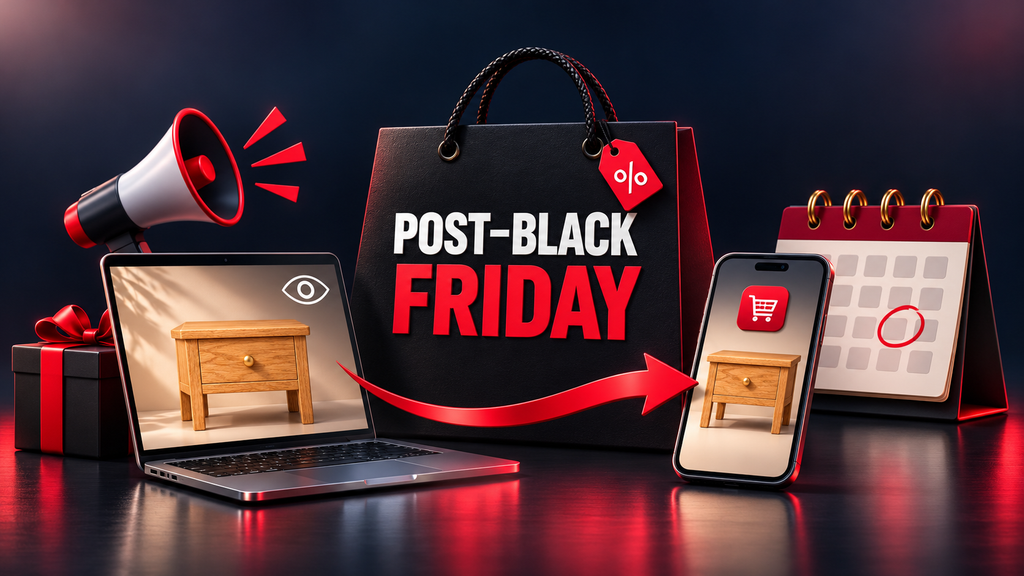
Black Friday is a customer-acquisition event. If you stop there, you leave money on the table.
- Retarget with Sponsored Display. Show ads to shoppers who viewed products but did not buy, and to buyers who might need a matching item (for example, a bedside table after a bed frame).
- Cross-sell. Promote products that go with what customers just bought.
- Protect the Christmas window. Update delivery cut-off dates and keep stock available for buyers still shopping for gifts.
- Lower the ad spend slowly. Do not turn everything off the day after Cyber Monday. Reduce bids in steps while watching ACOS.
- Ask for feedback the right way. Use Amazon’s built-in review request tools within the rules. Never use incentives for reviews.
- Plan January. Home organisation, storage and home office products often have their own post-Christmas demand. Plan that campaign early.
- Review stock. Rebalance FBA stock and plan restocks before the next peak.
A Simple Black Friday Timeline I Work To
| When | What I do |
|---|---|
| 10 to 12 weeks before | Review last year’s data, set targets, choose hero products, plan stock |
| 8 to 10 weeks before | Check deal eligibility and submit deal requests where possible |
| 6 to 8 weeks before | Send stock to FBA, finish margin calculations, set price rules |
| 4 to 6 weeks before | Refresh images, A+ Content and keywords |
| 3 to 4 weeks before | Build PPC structure, launch warm-up campaigns |
| 2 weeks before | Raise budgets gradually, start email and social warm-up |
| Event week | Check performance several times a day, adjust bids and budgets |
| Cyber Monday | Keep momentum, protect stock and Buy Box |
| 1 to 4 weeks after | Analyse results, retarget, plan Christmas and January |
If you are reading this close to the event and have not done the early steps, do not panic. Focus on three things: stock, margin and listing quality. Even with a late start, these three give the best return.
Common Black Friday Mistakes UK Home Brands Make
- Discounting too deeply without checking margin after fees, VAT and ads.
- Running out of stock mid-event.
- Increasing ad spend on weak listings and paying more for poor conversion.
- Setting daily budgets too low so campaigns stop early.
- Ignoring returns, which can quietly erase the profit on furniture.
- Looking only at revenue and not profit.
- Not keeping notes for next year.
FAQs
I start 10 to 12 weeks before. Deal submissions, stock transfers to FBA and listing work all take time, and the early deadlines are often the most important.
There is no universal number. It depends on your margin, your ad cost and your competitors. Run the unit economics first, as in Step 4, and choose the discount that still leaves a positive profit after ads.
A good ACOS is one that is below your break-even ACOS for that product. Many sellers accept a slightly higher ACOS during the event to gain rank and new customers, but only if the numbers support it.
They can be, especially for hero products with strong reviews and good margins. But they come with fees and conditions, so calculate the profit before applying.
Yes, but reduce them in steps. Retarget shoppers, protect rank, and move into Christmas and January campaigns.

