

Introduction: Why More Sales Don’t Always Mean More Profit
Many e-commerce businesses focus on one thing: getting more orders.
They invest in Meta Ads, Google Ads, influencer marketing, and product promotions. Sales start coming in, and everything looks promising.
But then the problems begin.
Customers cancel orders. Packages come back undelivered. Products get returned. Advertising costs increase, and the money left after expenses is much lower than expected.
I’ve learned an important lesson from working with e-commerce businesses: getting an order is only one part of building a successful online business. What happens before and after that order matters just as much.
A profitable e-commerce business needs more than good advertising. It needs the right products, a smooth buying experience, reliable delivery, effective customer communication, and a clear understanding of its financial performance.
In this guide, I’ll share 10 practical e-commerce tips that businesses can use to improve conversions, reduce unnecessary returns, recover lost sales, and build a more profitable online store.
Table of contents
- Introduction: Why More Sales Don’t Always Mean More Profit
- 1. Reduce E-commerce Returns by Improving the Post-Purchase Experience
- 2. Reduce Cart Abandonment by Understanding Why Customers Leave
- 3. Optimize Product Pages Before Increasing Advertising Spend
- 4. Use Customer Reviews to Improve Products and Advertising
- 5. Understand E-commerce Profit Margins, Not Just Revenue
- 6. Test E-commerce Ad Creatives Instead of Just Increasing Budgets
- 7. Use Customer Segmentation to Improve E-commerce Marketing
- 8. Validate Product Demand Before Investing in Inventory
- 9. Increase Customer Retention and Repeat Purchases
- 10. Use E-commerce Analytics to Identify What Is Affecting Sales
- A Practical 30-Day E-commerce Improvement Plan
- Frequently Asked Questions About E-commerce Growth
- Final Thoughts: Build a Profitable E-commerce Business, Not Just a Bigger Store
1. Reduce E-commerce Returns by Improving the Post-Purchase Experience
Let’s start with a problem many online sellers face: returns, refunds, and failed deliveries.
Sometimes a customer places an order but refuses to accept the package when the courier arrives. In other cases, delivery gets delayed, communication breaks down, or the customer simply forgets about the purchase.
The first reaction is often to blame the customer or the courier. But before doing that, look at your own order management process.
Ask yourself:
- Does the customer receive an order confirmation?
- Do they know when their package is expected to arrive?
- Are delivery delays communicated promptly?
- Is there a simple way for customers to contact the business?
- Are failed deliveries recorded with clear reasons?
A Strategy I Tested With One Client
For one client, we used a custom audience of recent purchasers and ran reminder ads to keep their orders top of mind.
The idea was simple: customers who had ordered recently would see reminders encouraging them to stay available for delivery.
In this client case, the reported return rate decreased from 25% to 3%.
This was a result from one client, not a guaranteed outcome for every store. The impact of this strategy depends on the original causes of returns, campaign execution, delivery performance, and how the return rate is measured.
It highlights an opportunity that many sellers overlook: customer communication should not stop after someone places an order.
How to Reduce Failed Deliveries and Returns
- Segment recent customers who placed orders within the last seven days.
- Where advertising platform policies and customer-consent requirements permit, create a suitable custom audience.
- Run a short reminder campaign with clear and helpful messaging.
- Coordinate reminders with actual order status and realistic delivery timelines.
- Compare delivery success and return rates against a previous period or a comparable group of orders.
Don’t rely on advertisements alone. Use WhatsApp or SMS updates where permitted, courier tracking, and order confirmation messages as well.
For more ideas, read Shopify’s guide to the post-purchase experience.
2. Reduce Cart Abandonment by Understanding Why Customers Leave
Imagine someone visits your online store, finds a product, adds it to their cart, and leaves without buying.
Many sellers immediately offer a discount to bring that customer back.
But what if the customer didn’t leave because of the price?
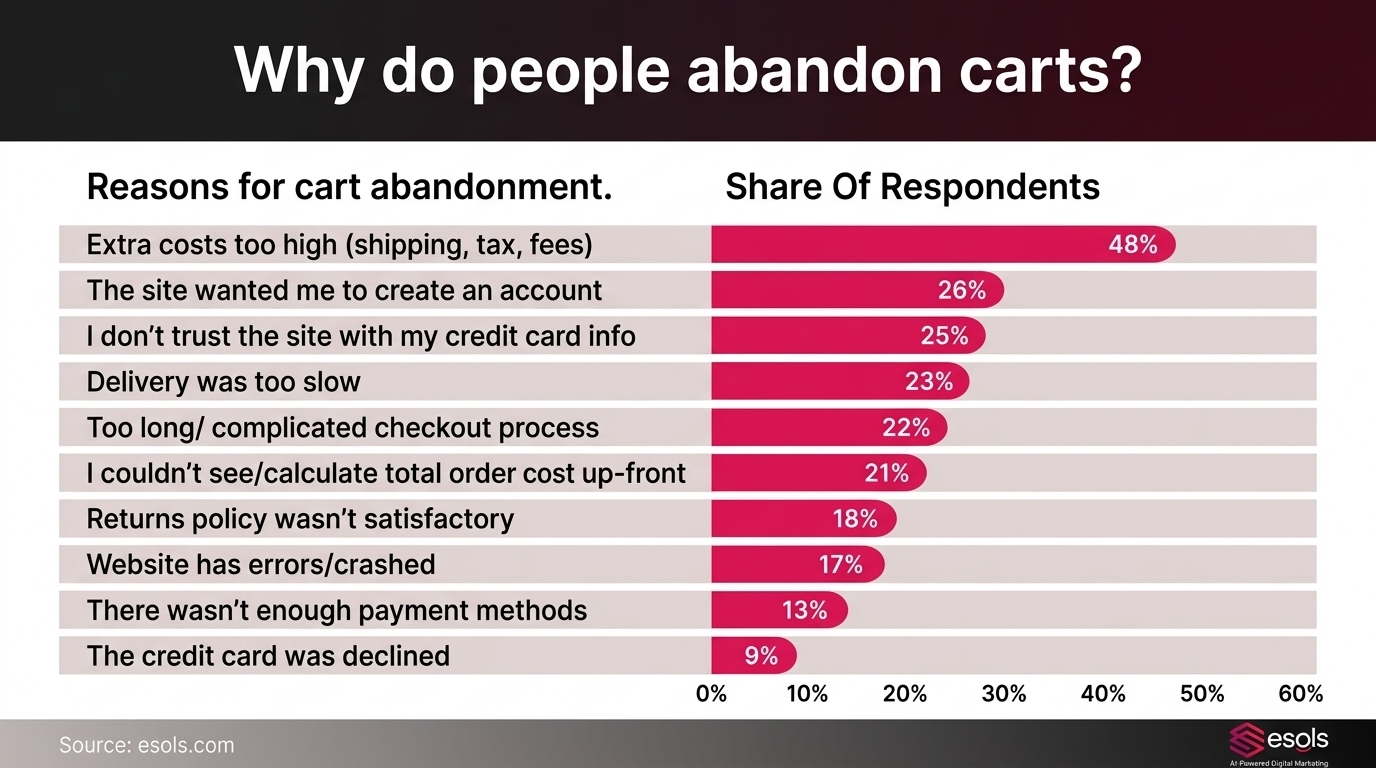
Perhaps shipping was too expensive. Maybe the delivery date wasn’t clear, checkout was too complicated, or the customer didn’t trust the website enough to enter their payment details.
Research from the Baymard Institute identifies unexpected additional costs, slow delivery, and trust concerns among the reasons shoppers abandon checkout. Its 2026 research also identifies shoppers who are simply browsing or aren’t ready to buy.
This tells us something important: not every abandoned cart needs a discount.
How to Improve Your E-commerce Checkout Experience
Start by reviewing your checkout process.
- Show shipping charges before the final payment step whenever possible.
- Make delivery estimates easy to find.
- Offer guest checkout if account creation isn’t necessary.
- Keep forms short and remove unnecessary fields.
- Make payment methods and return policies clear.
- Check that checkout works properly on mobile devices.
- Make sure payment gateways work reliably.
Use Abandoned Cart Recovery Campaigns
A customer who added a product to their cart may need a reminder, more information, or reassurance.
Test different messages rather than assuming every shopper needs a discount.
For example:
Message 1: Friendly reminder
“Still thinking about this product? Your cart is ready whenever you’re ready to order.”
Message 2: Customer assistance
“Have questions before ordering? Check the product details or contact our team. We’re happy to help.”
Message 3: Genuine offer
“If you have a genuine, available offer, explain it clearly without creating false urgency.”
The goal isn’t to pressure every visitor into buying. It’s to remove the reason that stopped them from purchasing.
Source: Baymard Institute’s Cart Abandonment Research.
3. Optimize Product Pages Before Increasing Advertising Spend

One of the most expensive mistakes in e-commerce is sending paid traffic to a product page that doesn’t answer basic customer questions.
You might have a good product and a reasonable price, but the page leaves shoppers wondering:
- What exactly am I buying?
- What size is it?
- What materials is it made from?
- What will it look like in real life?
- How long will delivery take?
- Can I return it if something goes wrong?
If customers cannot find these answers, they may leave. Even worse, they may buy based on incorrect assumptions and later return the product.
Essential Product Page Optimization Checklist
1. Product Images and Videos
Use clear images from multiple angles. Show the product in use where relevant. Short demonstration videos can help customers understand features that photographs cannot fully explain.
2. Product Descriptions
Explain what the product does, who it is for, and what makes it useful. Focus on customer benefits rather than filling the description with generic marketing claims.
3. Product Specifications
Include measurements, materials, compatibility, weight, dimensions, and other details that matter for the product category.
4. Customer Reviews
Display genuine customer feedback and address recurring concerns honestly. Reviews can help potential buyers understand what to expect.
5. Shipping and Returns Information
Explain delivery estimates, shipping costs, and return conditions before customers reach checkout.
6. Clear Call to Action
Make the next step obvious. Customers shouldn’t have to search for the Add to Cart button.
E-commerce entrepreneur Davie Fogarty has discussed the importance of understanding customers and communicating product value when building online brands.
The useful lesson is straightforward: your product page should help customers understand the offer, not make them work to figure it out.
For further guidance, see Shopify’s Product Page Optimization Guide.
4. Use Customer Reviews to Improve Products and Advertising
Customer reviews aren’t just social proof. They can also tell you what your customers actually care about.
Read your positive reviews and look for repeated benefits. Then examine negative reviews to identify complaints, confusion, and unmet expectations.
For example, imagine customers repeatedly say:
- “The product is smaller than I expected.”
- “The colour looks different from the photos.”
- “The instructions weren’t clear.”
- “Delivery took longer than promised.”
These comments reveal problems you can address.
If the product is smaller than customers expect, improve the size information and add comparison images.
If customers misunderstand how it works, create a short demonstration video.
If the issue is delivery, improve the fulfilment process rather than changing the product description alone.
Turn Customer Feedback Into Better Advertising Creatives

Suppose customers frequently ask whether a product is durable.
Instead of producing another generic advertisement that says, “Best quality product,” create a video showing the material, construction, testing process, or product in everyday use.
Address the concern directly.
Davie Fogarty’s discussions about customer research and building e-commerce brands also highlight the importance of understanding what customers value before developing marketing messages.
One important rule: never invent reviews, edit customer feedback to change its meaning, or advertise product claims you cannot substantiate.
5. Understand E-commerce Profit Margins, Not Just Revenue
A store can generate impressive revenue and still struggle financially.
Let’s use a simple example.
Suppose you sell a product for Rs. 3,000.
| Item | Amount |
|---|---|
| Selling price | Rs. 3,000 |
| Product cost | Rs. 1,200 |
| Delivery and packaging | Rs. 250 |
| Advertising cost per order | Rs. 600 |
| Other variable costs | Rs. 150 |
| Contribution before fixed overheads | Rs. 800 |
The store has Rs. 800 remaining before fixed overheads and any other expenses not included in this example.
Now imagine that returned or refused orders create additional courier charges, handling costs, damaged inventory, and lost advertising spend.
That contribution can disappear quickly.
This is why sellers need to track more than revenue and Return on Ad Spend (ROAS).
Important E-commerce Metrics to Monitor
- Customer acquisition cost (CAC)
- Average order value (AOV)
- Product gross margin
- Advertising spend
- Delivery success rate
- Return and refund rate
- Contribution margin after variable costs
- Repeat purchase rate
- Customer lifetime value (CLV)
In his video How to Build a Profitable E-Commerce Brand, Davie Fogarty discusses the importance of margins, fulfilment, operations, and financial discipline when building an e-commerce business.
The lesson is not that advertising doesn’t matter. It’s that advertising must work alongside sound business economics.
Before increasing your budget, calculate your break-even customer acquisition cost. Understand how much you can afford to spend to acquire a customer while still making a positive contribution.
6. Test E-commerce Ad Creatives Instead of Just Increasing Budgets
When an advertising campaign stops performing, many sellers respond by increasing the budget or making small changes to the audience.
Sometimes the real issue is the creative.
Customers have already seen the same video several times. The opening isn’t interesting. The advertisement doesn’t demonstrate the product clearly, or it fails to address the reason someone might hesitate to buy.
Four E-commerce Advertising Creative Angles to Test
1. Problem and Solution
Show the problem your product solves, then demonstrate the solution.
2. Product Demonstration
Show how the product works instead of relying entirely on marketing claims.
3. Customer Objection
Answer a common question, such as durability, size, installation, or ease of use.
4. Real Customer Experience
With permission, use genuine customer feedback or user-generated content to demonstrate how the product fits into everyday life.
Measure Advertising Performance Properly
For every test, define the metric that matters.
Click-through rate can help assess whether an advertisement attracts attention, but it doesn’t tell you whether the resulting orders are profitable.
Also check:
- Conversion rate
- Cost per purchase
- Average order value
- Return on ad spend
- Contribution margin
- Return and delivery rates
Davie Fogarty’s guide to building a successful e-commerce business discusses product differentiation, customer research, marketing, and operational lessons from his experience building brands.
Use these ideas as starting points, not universal rules. Test creative concepts against your own audience and product.
7. Use Customer Segmentation to Improve E-commerce Marketing

Not every customer is at the same stage of the buying journey.
Someone who visited your website once is different from someone who added a product to their cart. A first-time buyer is different from a repeat customer.
Someone who purchased a product last week may need delivery information rather than another sales offer.
Treating everyone the same can waste advertising spend and create a poor customer experience.
Useful Customer Segments for Online Stores
| Audience | Possible Message |
|---|---|
| Product-page visitors | Product benefits, demonstrations, and answers to common questions |
| Cart abandoners | Reminder, delivery information, or checkout assistance |
| Recent purchasers | Order updates and delivery reminders |
| Existing customers | Relevant complementary products |
| Repeat customers | Loyalty rewards or relevant new arrivals |
| Lapsed customers | A helpful reason to revisit the store |
Only create audiences and send messages using data you are permitted to use. Follow advertising platform policies and applicable privacy and consent requirements.
Keep messages relevant. A customer who has already bought a product shouldn’t keep seeing advertisements suggesting that they still need to purchase it.
The objective is to make communication more useful, not simply to show more advertisements.
8. Validate Product Demand Before Investing in Inventory
A product can look exciting on social media and still be a poor business opportunity.
Before launching a product, research the demand, competition, pricing, margins, shipping requirements, and potential customer complaints.
Start with questions such as:
- Are people already buying this type of product?
- What do competing products cost?
- What complaints appear repeatedly in customer reviews?
- Can I offer a meaningful improvement?
- How expensive is the product to package and deliver?
- Will the margins support advertising and returns?
- Is demand seasonal, recurring, or based on a short-lived trend?
Learn From Competitors Without Copying Them
Read reviews of competing products. Look for problems customers repeatedly mention, then consider whether you can solve those problems with a better product, clearer information, or a better buying experience.
You can also use:
- Google Trends and search trends
- Marketplace listings
- Competitor product pages
- Customer interviews
- Social media discussions
- Small advertising tests
Davie Fogarty’s content on building e-commerce brands highlights product validation, differentiation, and understanding the business beyond the initial launch.
Don’t invest heavily in inventory simply because a product is trending. Validate demand and calculate the economics first.
9. Increase Customer Retention and Repeat Purchases
Acquiring a new customer takes time and money. Yet some stores put almost all their effort into getting the first sale and very little into earning the second.
Retention starts with delivering what you promised.
After a successful delivery, you can improve the relationship by:
- Providing helpful product-use or care instructions.
- Asking for honest customer feedback.
- Resolving complaints promptly.
- Recommending genuinely relevant complementary products.
- Sending replenishment reminders when they make sense.
- Offering loyalty incentives where financially sustainable.
For example, a customer who buys skincare may appreciate instructions on using the product correctly.
Someone buying a household appliance may need setup guidance.
A customer buying a consumable product might appreciate a reminder when they are likely to need another one.
The timing and content should match the product.
Don’t send repeated promotional messages to customers who haven’t consented to receive them. Give people control over marketing communications.
How to Measure Customer Retention
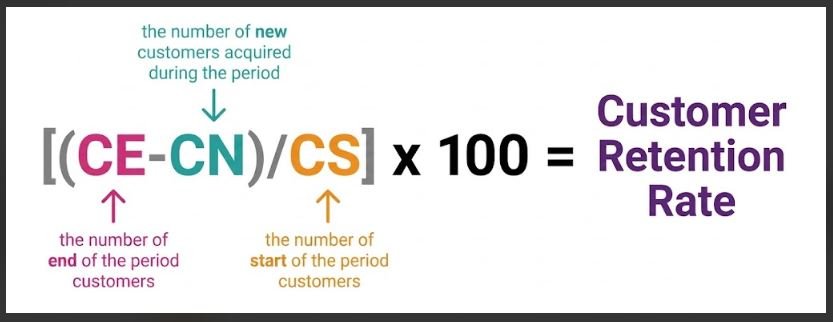
Track:
- Repeat purchase rate
- Time between purchases
- Customer lifetime value
- Revenue from returning customers
- Profitability of repeat orders
A high repeat purchase rate is useful only when repeat orders contribute positively to the business.
The objective is to build a relationship in which customers return because the product and experience are worth returning for.
10. Use E-commerce Analytics to Identify What Is Affecting Sales
One of the most useful habits an e-commerce seller can develop is to stop guessing.
If sales drop, don’t immediately assume the advertisements are the problem.
The issue could be a product going out of stock, a website error, a shipping delay, a price change, a broken payment method, or a decline in conversion rate.
Break the buying journey into stages:
- Website visits
- Product-page views
- Add-to-cart events
- Checkout starts
- Completed purchases
- Successfully delivered orders
- Returns and refunds
- Repeat purchases
Look at where the biggest drop occurs.
If many people visit product pages but few add items to their carts, review the product offer, images, price, and page clarity.
If customers add products to their carts but leave at checkout, investigate delivery costs, payment options, and checkout friction.
If orders are placed but not delivered, focus on fulfilment, customer confirmation, courier performance, and post-purchase communication.
If orders are delivered but frequently returned, analyse the return reasons and identify whether the issue relates to product quality, inaccurate descriptions, sizing, damage, or changed customer expectations.
Shopify’s Product Page Optimization Guide explains how businesses can evaluate product performance using metrics such as conversion rate, add-to-cart rate, average order value, and returns.
Conduct a Simple Weekly E-commerce Performance Review
Every week, choose one problem to investigate.
Write down:
- What is happening?
- What evidence supports that conclusion?
- What change will we test?
- Which metric should improve?
- What other metric must not get worse?
- When will we review the result?
Change one major variable at a time where practical, and give the test enough data to produce a meaningful comparison.
This approach is more useful than making five changes at once and having no idea which one worked.
A Practical 30-Day E-commerce Improvement Plan
You don’t need to implement every strategy immediately. Start with the problems that are costing your business the most.
Week 1: Audit the Basics
Review product pages, shipping information, checkout, return policies, and mobile usability.
Identify the biggest points of confusion and prioritize improvements.
Week 2: Improve Customer Communication
Set up clear order confirmations, shipping updates, delivery notifications, and a process for handling delayed or failed deliveries.
Week 3: Test Marketing Improvements
Test new advertising creatives, improve abandoned-cart messages, and review your customer segments.
Make sure each message serves a clear purpose.
Week 4: Review Profitability
Compare advertising costs, contribution margin, delivery success, return reasons, and repeat purchases.
Identify which changes helped and which need more testing.
At the end of the month, you should have a clearer understanding of where your store is losing money and which improvements deserve further investment.
Frequently Asked Questions About E-commerce Growth
You can increase e-commerce sales by improving product pages, simplifying checkout, using effective advertising campaigns, recovering abandoned carts, and building customer trust. Understanding customer behaviour and regularly testing improvements can also help increase conversion rates.
Start by providing accurate product descriptions, clear images, correct sizing information, transparent delivery estimates, and realistic product expectations. You should also monitor return reasons, improve order communication, and address fulfilment problems.
There is no single conversion rate that works for every e-commerce business. Performance varies by product category, traffic source, price, location, and customer intent. Compare your store against relevant industry benchmarks, but focus primarily on improving your own conversion rate over time.
Use automated email reminders, SMS or WhatsApp messages where customers have consented, and relevant retargeting campaigns. Explain product benefits, provide delivery information, and address checkout concerns. Discounts should be tested rather than offered automatically.
Improve product margins, control customer acquisition costs, reduce failed deliveries, manage returns, increase average order value, and encourage repeat purchases. Track contribution margin rather than relying on revenue or ROAS alone.
Important metrics include conversion rate, average order value, customer acquisition cost, return on ad spend, gross margin, contribution margin, delivery success rate, return rate, and repeat purchase rate.
Final Thoughts: Build a Profitable E-commerce Business, Not Just a Bigger Store
E-commerce growth isn’t simply about increasing advertising budgets or generating more orders.
It’s about understanding the entire customer journey, from discovering a product to receiving it, using it, and deciding whether to buy again.
The best improvements are often practical rather than complicated: clearer product pages, more transparent delivery information, better customer communication, stronger financial tracking, and advertising that answers real customer questions.
My experience with a client whose reported return rate fell from 25% to 3% reinforced an important lesson: opportunities can exist after the purchase, not just before it.
Every store is different, so the key is to test strategies, measure the results, and learn from what your customers actually do.
Don’t just ask how to generate more sales. Ask how to turn more of those sales into successful deliveries, satisfied customers, and sustainable profit.
That is how you build an e-commerce business designed to last.

